Nailing Specs: Why Nailing Is King on a Composition Roof
The largest single reason a composition roof fails prematurely is not the shingle. It is the nail.
October 7, 2026 · 6 min read
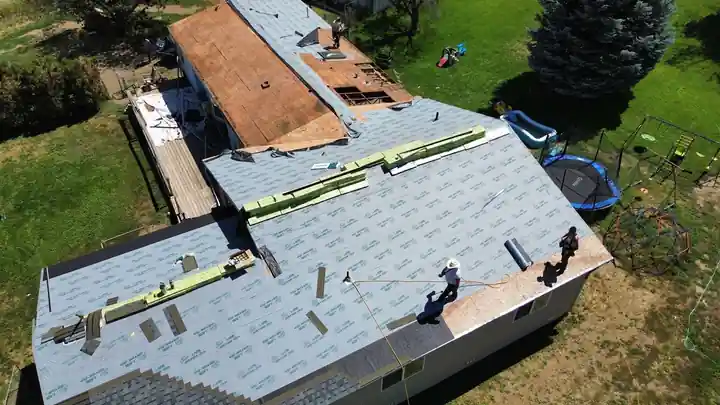
The largest single reason a composition roof fails prematurely is improper nailing. I can already feel the wrath of roofers nationwide as I write this article.
Why nailing is king
A properly driven nail is perpendicular to the roof surface, and its head clamps the material tight to the deck. There are three common ways to get it wrong.
- Under driven: the head isn't clamped to the roof surface, so the shingle hangs on the shaft of the nail. With drag load from snow, the weight pulls the shingle down the slope. The nail doesn't move, so the shingle gets sliced as it slides.
- Over driven: the nail has broken through the material, leaving the head little or nothing to clamp the shingle to the deck. These shingles can slide from drag load or be lifted away by wind.
- Crooked: the head isn't clamping with its full surface, and that is the least of the concerns. Crooked nails tend to back up out of the substrate, and the head pokes through the shingle covering it and puts a hole in your roof system.
The fix for under and over driven nails is simple. The pressure on the nail gun has to be adjusted up to drive the nail harder, or down to drive it less. We see under and over driven nails all the time when we do repairs, and we believe the guns are not being adjusted. An installer may set his gun once when he starts work and never look back. Say he begins early in the morning and the gun is over driving, so he lowers the pressure and now the nails sit perfectly. As the day heats up, the shingles get blistering hot and soft, and the nails start blowing through the material.
Slowing down is the second fix. An installer who is not rushing can see that the nails are over driven and change the settings on the gun. But there is a major obstacle to that simple and perfect solution.
Piece rates
Roofers are prideful people. They pride themselves on withstanding harsh temperatures and harsh conditions, and most of all on how fast they can roof. Search YouTube and you will find plenty of roofers proudly claiming to be the fastest. I cringe when I see them fly.
A piece rate pays an installer for production, not quality. The contractor pays X dollars for every square, or four bundles, installed. That is wonderful for the contractor when the roof goes on at breakneck speed, and terrible for the customer. Like a rodeo, the job is started and finished in a flash, and the crew proudly walks the homeowner out to the street to admire the work. The homeowner's eyes light up: a job well done at an amazing price. Then comes the review: “Five star service, these boys showed up every day, took them only two days to complete the project at a good price too!”
As we always say, anyone can make a roof look good from the street. The devil is in the details, and the devil comes knocking soon enough. Are those reviews ever removed when the roof starts to fly off? What about the five year workmanship warranty? Premature roof failure rarely shows up right away. Most of the time the problems begin after ten or fifteen years. I have seen a major disaster after two years, a roof riddled with holes from backed-out nails, but only once.
Piece rates hurt homeowners for a second reason. Installers paid by the square love open areas where they can make money, so the inexperienced workers with little or no training get placed on the details. Nobody has time to teach them, because everyone else is busy making the big money. Roofing is seasonal work, and most contractors lay off the whole crew after Thanksgiving, so turnover is high. Because most contractors pay piece rates, the industry is saturated with under-trained installers who have learned to install every way but the right way.
“Every roofer has his own way” is something we hear a lot in this industry, and it is true. Each roofer has settled on a way to do certain things and never deviates from it. Many will argue about whose way is better. The manufacturer's way is the one that protects your warranty.
What fast nailing looks like
An installer on piece rates fires a nail about every half nanosecond, and as the last nail goes in, the next shingle is already sliding into place. Watch one of the speed-roofing videos online and listen to the boast: “On the line every time.” He may be hitting the nail line, but he never looks at the nails he just drove. And the nails don't always behave. Standard 1 1/4-inch coil nails travel down the shaft of the nail and bounce around, so not every nail comes out straight as an arrow. That is why Yakima Roofing & Remodeling, LLC uses 1 3/4-inch coils: the longer nail travels straight down and enters the wood straight.
The problem with nailing that fast is that the installer holds the gun tilted at a slight angle, so each nail goes in crooked by manufacturer spec. At that speed there is zero time to check whether each nail was installed to spec. A low nail is called a shiner: it sits below the nail line, shows silver, and rusts over time. Many installers nail too high and miss the nail line by an average of 1 inch. Some miss by 2 inches and others by 1/2 inch. Either way the nail lands in the thinnest part of the shingle, and even if it were flush and straight it has little to hold down, so wind can easily lift the shingle away.
Look closely at the nails in those videos. Many are close to the line, but not within 1 inch of the shingle edge, and many manufacturers call for closer to 2 inches. Some are driven above the nail line, and a hint of darkness around a nail usually means it has blown through or broken the surface of the material. Can these installers account for every nail they've driven? No. They pride themselves on speed, and roofs blow off all over town as a result. For the piece rate installer, faster literally means more money in his pocket, and for the contractor it means finishing sooner and moving on to the next customer.
Hourly wages let installers slow down and teach new installers the manufacturer's installation specs. Hourly workers get better training, and the customer unknowingly benefits from a better install at a fair market price. Even hourly installers tend to want to speed up. I guess it is just in the blood.
Your warranty depends on it
At Yakima Roofing & Remodeling, LLC we teach our installers to work at a constant pace where they can inspect each driven nail and confirm it passes the manufacturer's specs. They are taught how the manufacturer wants each detail completed, and they don't try to figure out their own way of doing things.
A detail that isn't done correctly can be fixed. A roof that wasn't nailed correctly must be re-roofed. And the manufacturer will void your warranty if the nailing isn't done to their specs. If your shingles develop a defect halfway through their life and you call the manufacturer, your warranty depends on whether the nailing specs were met. If they were, you could be given a new roof and the manufacturer pays to have it installed. If they weren't, you pay for the new roof out of pocket.
Would you want to put your warranty on the line for someone else's pride, so they can look good doing the job and get your money into their pockets faster?
Yakima Roofing & Remodeling, LLC, 509-907-7206
Call 509-907-7206More articles
DIY Asphalt Shingle Inspection: Is Your Roof Failing?
A walk-through of what to look at on a composition roof, so you know whether you need a repair or should start planning a replacement.
Underlayment Is Not a Roofing System
Underlayment is a critical layer, but it is one part of the roof, not the roof itself.