DIY Asphalt Shingle Inspection: Is Your Roof Failing?
A walk-through of what to look at on a composition roof, so you know whether you need a repair or should start planning a replacement.
October 7, 2026 · 7 min read
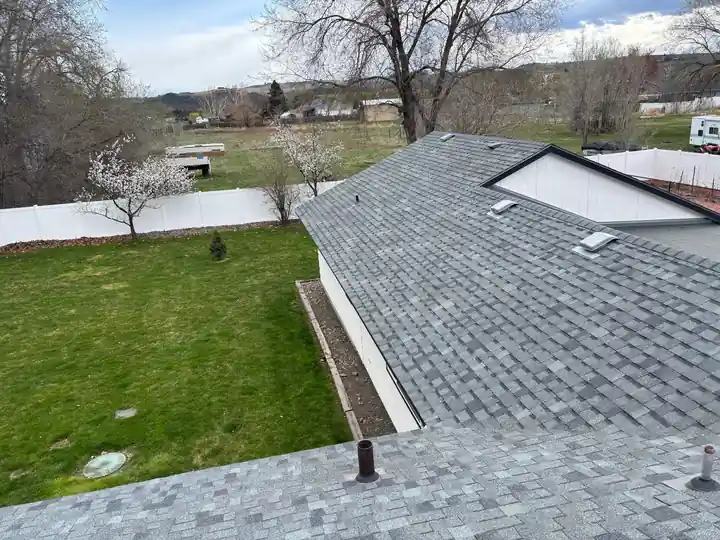
This article covers the main things to look at to decide whether your composition roof will last for many more years or whether it is time to plan for a new one. It gives you a working understanding of what to look for, not a full diagnosis. In many cases you will still want a professional to look at it. Roofing practices also differ from region to region. In Yakima, Washington, we install a roof one way. In Las Vegas, Nevada, many roofing contractors believe the underlayment is the roof system, and they do not install the roof the way we would here.
Just as with a shake or wood shingle roof, the south facing decks are exposed to the sun for more of the day and will show the most damage. We always start with the south facing decks. If they are failing, the rest of the roof is not far behind.
To decide whether the roof is failing, look at three things:
- Wall, valley, vent and pipe flashings.
- The roofing shingles themselves.
- The roof fasteners.
Start with the flashings
Some roofing contractors bid with the cheapest materials possible to keep the price down and win the job, and flashings are one of the first places that shows.
Attic ventilation: check all of your attic vents and flapper vents first. If they are plastic, they can crack long before the roof's life is over. If everything else on this list passes and only the vents fail, you just need new vents and you should be in good shape.
Pipe flashings: the rubber around a pipe flashing does fail and can leave large voids around the pipe for moisture to get into the house. Stone coated pipe flashings are no longer sold, but the rubber on those would fail after the first few years. As with the vents, if the rest of the roof passes, new pipe flashings are all you need and the roof should last.
Wall flashings: on a composition roof there are three types.
- Step flash runs up the sides of a dormer or wall. These are typically 8-inch by 8-inch pieces of thin metal bent in half, with 4 inches resting on the roof and 4 inches going up the wall. One step flash should sit on each shingle as it goes up the wall. Some installers use one step flash for every two shingles. They may get away with it if the piece is longer, but it is not good practice. The step flashing should come down to the bottom of the shingle so it is hidden. If it is exposed that is usually fine, as long as it does not go up too high above the nail line of the shingle it sits on.
- Roof to wall flashing spans the width of the bottom of your chimney or dormer wall. It is typically bent in half so 3 inches extends up the wall and 4 inches rests on the deck. It is not individual pieces like step flash. It comes in 10 foot lengths and has to be cut and bent around the two bottom corners of the chimney, skylight or dormer. Check those corners. If you can see a void, you could have a leak there.
- Back pan is the metal used on the back side of skylights and chimneys. It may extend up the side of the curb or chimney by 4 inches and rest on the roof by 14 inches. It has to be bent in the same way as roof to wall flashing, and all the water must drain onto the last piece of step flashing. Sealant is typically used on all four corners.
If you have leaks around a chimney or skylight, the installer may have placed nails too low on the back pan, so that when snow builds up behind the skylight or chimney it floods the nail. Another common problem is nails placed within the first 2 inches of the wall when installing step flash. Nails belong at the outermost edges of the step flashing. If holes sit too close to the wall, water can find the nail penetration and leak into the building. If the flashings are leaking and the rest of the roof passes inspection, fixing those trouble areas may be all you need.
Valleys
Valleys are the last flashing to cover. We find valleys roofed wrong all the time, especially in complicated areas that call for a good understanding of the installation specs. The valley metal may be rusting out, or the installer may have put nails very close to the center of the valley, which is more common than it should be. If that is the only problem, removing the old valley and installing a new one adds life to the system. There are many ways to get a valley wrong:
- If it is leaking, it should be redone.
- If it is not leaking but you see rust, it should be redone.
- If you see humps in the shingles, the valley metal could be coming loose.
- If you see nails close to the center of the valley, it should be redone.
With that basic understanding you should be able to tell whether flashings are what is causing your roof to fail. Before you hire someone to fix them, check the condition of the shingles.
Check the shingles
Granule loss is common when a roof is at the end of its life. Premature granule loss can also come from someone shoveling snow and dragging the shovel across the shingles, or from heavy traffic on the roof, such as kids playing up there on a hot summer day. If you see one or two areas where the base mat is showing, replacing a few shingles may be the right move. If a large share of the roof has lost a lot of granules, it is time to plan for a new roof.
If you see a white sheen on the roof in the right light, you are looking at the fiberglass matting. The asphalt waterproofing layer on the top side is nearly gone. It is a lot like a cavity burning through the outer layers of a tooth and exposing the root canal. The roof may still be holding out moisture, but at any time you could have severe leaks. The fiberglass is what keeps a shingle from becoming brittle and breaking off in pieces in the wind. If UV destroys it, cracks begin to form.
On a roof we tore off in December 2023, the shingles were cracked, and the old felt paper underneath was stained where moisture had come through the shingle. Every one of those spots was wet when we took the roof apart.
Also look for shingles sliding down the slope. This is usually easy to spot because the shingle nail line ends up exposed. It happens more on steeper slopes and when staples are used as the fastener. We have also seen many roofs fail early because the fasteners were placed above the nail line. The drag load of heavy snow pulls down on the shingle, and the shingle tears around the nail as it slips down the roof. Where this has happened you can see small nail holes sitting well above the nail line. Our post on nailing goes deeper on why this matters.
Small cracks forming in the shingle are another sign. When cracks begin to form, it is time for a new roof.
Fasteners decide the roof's life
Fasteners are the other big issue, but unlike flashings, if the fasteners were not installed to spec, a re-roof is most likely needed. Fastener problems are the leading cause of premature roof failure. In today's roofing industry, installers take pride in speed and quantity over quality, and many believe the faster they are, the better they are. While they install your shingles they are also voiding your manufacturer warranty. The result is that a 30 year roof gets cut to half its life, and many customers find themselves shopping for a new roof with life still left in the shingles.
Most wind damage can be traced to improper nailing. If you find nailing problems, plan for a new roof. You may be able to limp the roof along for a few years with repairs, but one good storm can rip off whole sections and cause major water damage, so do not try to nurse it through the remaining life of the shingles.
In Yakima and nearby areas like Selah, Naches and Ellensburg, we see a lot of wind at the start of fall. That is when we see most of the wind damage, though summer storms can be strong enough to push down trees and rip metal roofs off large warehouses. A shingle that was not fastened properly stands little chance when the windy season arrives.
Yakima Roofing & Remodeling, LLC, 509-907-7206
Call 509-907-7206More articles
Underlayment Is Not a Roofing System
Underlayment is a critical layer, but it is one part of the roof, not the roof itself.
TPO or PVC: Which Membrane Fits Your Building in Yakima?
Both membranes work on commercial roofs, but they suit different budgets, buildings and risks.