RESIDENTIAL ROOFING
Residential roofing in Yakima and Naches, built layer by layer
Repairs, replacements and inspections on shingle, metal, tile and shake roofs, torn off to the deck and nailed to the manufacturer's spec.
Chapter 01
Where Yakima shingle roofs actually fail
Most premature roof failure is an installation problem, not a material problem. Nailing is the biggest reason a roof does not last its full term. An under-driven nail is not clamping the shingle, so the shingle hangs on the shaft and slides down the slope under snow drag until the nail slices it. An over-driven nail has blown through the mat and holds nothing. A crooked nail backs out of the deck and pokes a hole through the shingle that covers it.
Nail placement is the quiet one. Plenty of installers nail an inch or two above the nail line, which puts the fastener in the thinnest part of the shingle with very little left to hold it down, and the first strong wind lifts the course. Foot traffic does its own damage too: scuffing a shingle strips granules and exposes the base mat to UV. None of this shows from the street. It shows ten or fifteen years later, and by then the manufacturer can refuse the warranty because the nailing was not to spec.
Cedar roofs fail differently. Shakes and wood shingles cup and curl, the ridge and hip pieces separate, shakes split along the grain over the seam below, and fungus eats the fibers until a heavy wind or a wet snow pulls them loose. Today's cedar comes from younger groves and no longer lasts 30 years the way old-growth shakes did.
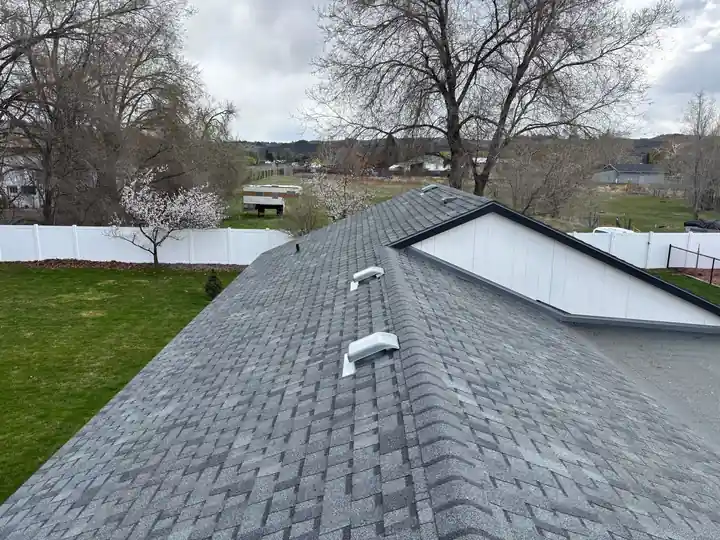
Drone view of a new grey architectural shingle roof with a skylight over a green yard in the Yakima Valley
Deck, ice guard, synthetic: the order we build in
The crew works in a fixed order, and it starts with a complete tear-off. Local code allows two layers, but Yakima Roofing & Remodeling recommends removing the existing ones on sloped roofs. Old fasteners that have worked up will puncture the new roof, rotted or under-nailed decking carries straight into the new roof, and ice guard laid over old shingles cannot stick to the wood, so an ice dam can keep crawling under it. Once the deck is bare it gets inspected, re-nailed where it is loose, and replaced where it is damaged. Then the ice guard goes onto clean wood along the eaves, valleys and penetrations.
They go past the manufacturer's spec in two places. Pipes are sealed to the ice guard, so if an ice dam climbs a pipe it cannot get in around the flashing. And over new ice guard they lay synthetic underlayment, a barrier between the ice guard and the shingles. Ice guard does not let go of old shingles at the next tear-off, and when it does not let go it takes the decking with it. The synthetic layer means the next crew removes the roof without paying to replace the deck.
Shingles go down on 1 3/4 inch coil nails, because the longer nail travels straight down the shaft and enters the wood straight where a short coil bounces. The installers are paid hourly, with no piece rates, so they can hold a steady pace and check each driven nail against the manufacturer's spec. And the rule on every job in Naches, Yakima and the valley towns around them is the same: remove only what can be covered and cleaned up that day. The house is not left open overnight, and the licence on the paperwork is YAKIMRR785KB.
Chapter 03
Reading your own roof before you call
Start with the south-facing slopes. They sit in the sun longest, so they fail first, and if they are going the rest of the roof is not far behind. From the ground, walk the whole house and look at the flashings at walls, valleys, vents and pipes, then at the shingles, then at the fasteners. On a cedar roof, look for cupping, curling and separating ridge pieces. On asphalt, look for granule loss and plastic attic vents that have cracked long before the roof did.
Do not walk a cupped or gray shake roof. It is brittle and your weight will crack it. Stand on a ladder at the top of the south slope, or have someone fly a drone over it. In Yakima, Selah, Naches and Ellensburg the wind arrives early in the fall, so a loose shingle or open valley that has been fine all summer is worth fixing before then. If you find something, call 509-907-7206. If you find nothing, they will tell you that too, because a minor issue that can be fixed does not need a whole new roof.
Google reviewers give them 5.0 from 25 reviews, and one describes the prep: loose boards re-nailed, damaged boards and holes replaced, then the underlayment.
What goes on top
What we install
Architectural shingles
The practical choice. Asphalt can last 30 to 50 years and handles heavy snow load and foot traffic, as long as it is installed correctly. Most of its failures come from installation, not the shingle.
Metal
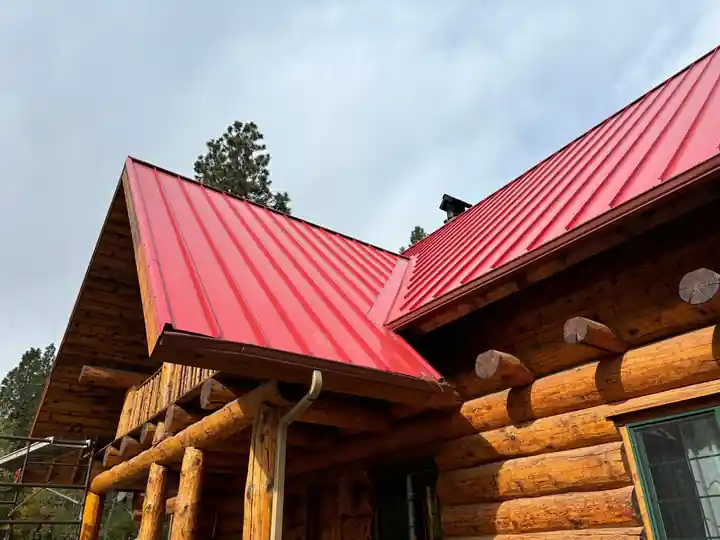
Costly up front, and a good installer is hard to find, but it sheds snow better than anything else and most zinc-coated residential systems can last 80 to 100 years. It can be noisy in heavy rain.
Tile
A timeless look that can last for centuries. It is heavy, so the roof structure may need strengthening, and broken pieces from foot traffic need replacements, so keep a spare stock.
Shake
Beautiful and unique, but today's cedar does not last like the old growth did, it has no fire resistance, and few installers still know how to put it on or maintain it.
Wood shingles
Inspected the same way as shake: cupping, curling, splits, fungal damage and separating hip and ridge pieces tell you how much life is left.
What does it cost? A standard asphalt roof with good access and a moderate pitch typically runs $4 to $6 per square foot in Yakima, and repairs start at a $500 minimum plus tax. The full breakdown, including steep pitch and the payment plan, is on the pricing page.
For the long versions of the nailing, ice guard and inspection write-ups above, read the Learning Center. Flat or low slope roof on a commercial building? That is a different set of materials.