Low Ball Tactics: How a Cheap Roofing Bid Gets Expensive
The cheapest bid on the table is rarely the cheapest roof you will end up paying for.
October 7, 2026 · 6 min read
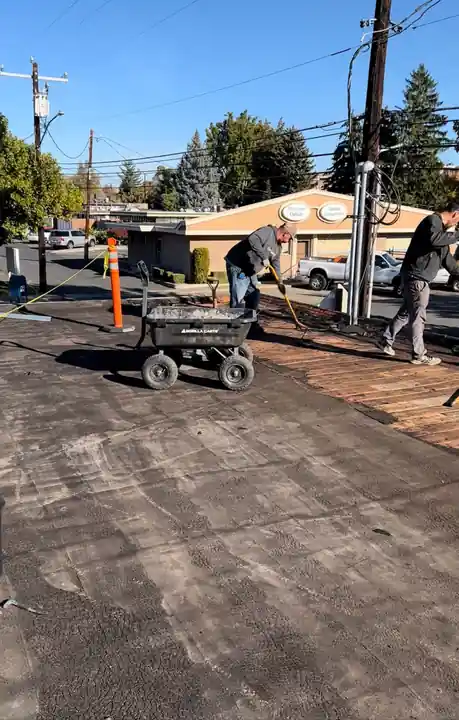
Here comes the windup, he throws, he strikes out the hitter! So what is the low ball tactic?
A low ball tactic is used to reduce the cost of a bid to beat all of the competitors. Sounds good, so how could it be bad? Doesn't it show they care more about the customer than about lining their pockets? The answer is no.
How can it cost more when it's so cheap?
The low ball estimate is a great price today and a worse price tomorrow. It is not about quality products. The cheapest products are estimated, or old products that are still good now but won't be in a year or two are reused. Take pipe penetrations on a re-roof. The rubber typically lasts around 30 to 50 years, and after that it begins to break down. If you are getting a new roof, that old pipe flashing isn't going to go another round. New ones are cheap, so get them and save yourself the headaches from leaks later.
Material is one area where a contractor can really cut prices by reusing old products while competitors bid new ones. Those who don't understand what they are doing get fooled into believing the low ball contractor is giving them a wonderful price out of the goodness of his heart.
Not all contractors are the same, even though they are all hired to do the same job. Take an asphalt contractor who wasn't called and rings your doorbell.
Asphalt contractor: “Hello, I noticed you have a gravel driveway and thought I'd come talk to you. We just did a job in the area and we're all finished up, but we have some asphalt left over.” You: “Oh?” Contractor: “Yes sir, and it appears to be just enough to do your driveway.” You: “Oh?” Contractor: “If you're interested we could be here in 20 minutes. The crew is already mobilized and in the area, which is a big cost savings in itself. We could do this entire driveway for $5000, but I need to know now because the asphalt's cooling fast. Otherwise I'll ask this fellow over here and he might get this wonderful deal.” You: “Well sure, I guess, go for it.”
Then the contractor calls his guy sitting at the asphalt plant: get a load and bring it to 123 Sucker Lane, we hooked a big one. What typically happens is they pour your driveway with a crown in it. The edges are thick and the middle is thin. The edges look good, so you assume the rest is just as thick, but six months down the road when winter hits, your new driveway begins to crack and crumble. No, I wasn't the victim. I did my research before hiring.
Ways a roofing contractor can low ball you
Every industry has its low ball tactic wizards. Here are a few ways roofing contractors do it, just to name some that I have seen or discovered over the years.
- A poor scope of work, with vague descriptions of the materials and the work to be done.
- Planning to stretch materials and not ordering the amount needed.
- Reusing old products that are already installed.
- Using the cheapest material possible.
- Leaving sales tax and permits out of the bid, then charging them on the final bill.
- Not paying workers comp or sales tax at all.
- Paying employees under the table so they can pay higher wages without the higher taxes.
- Substrate charges that appear low but are twice as high.
Sometimes a low ball bid is actually the same as a fair market bid, but withholding sales tax and permits is enough to make the customer believe they are getting a better price, only to be hit with both when the bill comes due. The customer may have liked Contractor A better, but Contractor B's price was that much sweeter and, as I've heard it said, “I just can't leave money on the table.” So the job goes to Contractor B. The customer learns their instincts about Contractor A were right: A would have been the more professional choice, B has a list of issues, and when the bill comes due B's price is now what A's upfront price was.
The little details most people miss
Contractor A lists substrate repairs at $2.00 per square foot. Contractor B lists substrate repairs at $1.50 per linear foot. Clearly Contractor B's overall price is better, and they will fix any substrate issues for less as well. Not so fast. Linear feet must be converted to square feet.
Say we have an area 2 feet by 1 foot that needs to be replaced. From truss to truss is 2 feet, so that is the distance we must span. 2 feet by 1 foot is 2 square feet, so Contractor A charges $4.00 to remove the old substrate and replace it with new.
Contractor B must convert his linear price into square-foot area. His boards are 4 inches wide and we must fill 12 inches, so it takes 3 boards, each 2 feet long. Board 1 costs $1.50 per foot and we need two feet, so $3.00. Board 2 also costs $3.00, bringing us to $6.00. Board 3 costs another $3.00, so filling the same area costs $9.00, more than twice Contractor A's $4.00.
This is an example, and the real price depends on the width of the board used. If a board is less than 12 inches wide, you pay more. Replace a single board 3 inches wide by 2 feet long and Contractor B charges $3.00, while Contractor A, charging by area, would charge about $1.00 because the total area is less than one square foot. And if Contractor B says his figures are based on a 12-inch board, so a 24-inch length is only 2 linear feet, I would ask why he is charging by the linear foot when his figures are already based on area. I would also ask: if the area needing repair is 6 inches wide by 2 feet long, would I be charged half?
Substrate repairs are always a discovery
No contractor can see through the roofing system to know the extent of substrate damage, if any. That is why we all should include a price for repairs if we come across damage. A surprise repair bill for substrate isn't something anyone is being dishonest about. The good contractor tells the customer what the price is and why it matters. We can't speculate on the cost of damage, and if we did, everyone's prices would be bloated, because every contractor would want to be covered 100 percent. What if 100 percent of the substrate needed to be fixed and we can't see that through the old roof? It is unlikely, but the risk is real. If a contractor estimates that 10 percent needs to be fixed and is wrong by 10 percent, why should he fix something for free? That is why it is standard for contractors to say: if we find it and fix it, this is the agreed price up front.
Estimation error
The contractor who leaves out the correct amount of material to keep his price low has a special scheme in the works. After he is awarded the project, he tears off portions of the roof, installs material for a few days, and near the end of the project he returns with the problem: “We need more material.” What do you do in that moment?
I know good contractors who will cover the mistake and never bother the customer. They take the loss, the customer never knows, and when the bill comes due they charge the expected amount. The low ball contractor, though, has to finish the job, and now his price more closely reflects the price of the honest contractors who didn't get the job because of their good-natured standards.
Our mission with these blogs is to expose these tactics. The result, we hope, is that they are no longer used and everyone has to submit an honest bid and do honest work.
Yakima Roofing & Remodeling, LLC, 509-907-7206
Call 509-907-7206More articles
DIY Asphalt Shingle Inspection: Is Your Roof Failing?
A walk-through of what to look at on a composition roof, so you know whether you need a repair or should start planning a replacement.
Underlayment Is Not a Roofing System
Underlayment is a critical layer, but it is one part of the roof, not the roof itself.