Ice Guard: What It Does and How to Make It Work
Ice guard stops ice dam leaks, but only when it is stuck to the wood and installed the right way.
October 7, 2026 · 5 min read
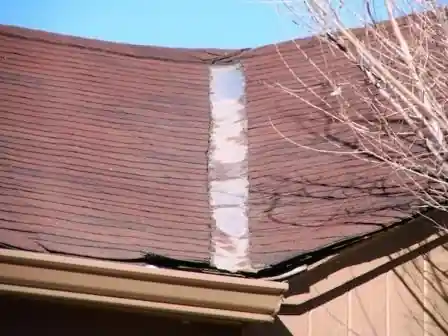
Ice guard, also known as ice and water shield, is made from polymer-modified bitumen. It is produced in 3 foot wide rolls, and the length varies by manufacturer and function. It has a sticky back side covered by a protective cellophane that must be stripped off before the product is applied.
Ice guard is applied to the wood substrate along the eaves of the roof. It can also be applied at gables, valleys, and around skylights and chimneys. Wherever it is installed, the key to it working as designed is that it adheres to the wood roof surface of the house.
What is the purpose of ice guard?
Hot air in the attic melts the snow on the roof surface. The snowmelt runs down to the eave and passes beyond the building walls. Once the water is past the building line, it begins to refreeze and forms an ice dam. The dam keeps growing as more melt hits it and freezes. Soon it grows under the shingles of your roof and causes a leak.
More attic insulation can help by keeping the heat of your living space from entering the attic. Gutters that are not cleaned cannot carry off enough snowmelt, which quickly freezes and becomes a giant ice dam. As the ice dam grows, it crawls up and under the roof system. When temperatures rise enough to melt the snow and ice, it melts under the roof system and infiltrates your home.
Ice guard adheres to the wood substrate, and your new roof is installed over it. When the nails that hold your shingles puncture the ice guard, it seals around each nail like a gasket. Now when an ice dam forms and ice crawls under your roof system, the ice sits on top of the ice guard. If an ice dam started in the gutter and crawled under the first shingle, it can't get under the ice guard because the ice guard is adhered to the wood. It crawls over it instead. When it melts as the temperature rises, it melts safely on top of the ice guard and simply flows out.
How far past the building line
Building codes may require that ice guard be installed 2 feet beyond the building line for maximum protection. As of now, no building codes or manufacturers have details or instructions for what to do when pipe flashings or skylights fall within the ice guard zone at the eaves.
At Yakima Roofing & Remodeling we go beyond the manufacturers' specs and local building codes by sealing pipes to the ice guard. This isn't a practice of other contractors and may never become standard, but we believe in going the extra mile for our customers, even if they don't know they are getting the extra protection at no extra cost. Now if an ice dam does form and crawl up around a pipe, it can't infiltrate around the pipe flashing.
Installing a new roof over an old roof
A common practice among roofers is to install a new roof over an existing one. We will cover why that is not a good idea in another post, but for ice guard specifically there is one clear reason. When ice guard is installed over old shingles, it cannot adhere to the wood substrate, so ice dams can keep crawling under the old shingles and into the home.
Either the first roof along the eaves should be removed so the ice guard can adhere to the wood, or you are wasting your money. The local building codes department couldn't answer a simple question when we asked it: do you install ice guard over an existing roof? They want ice guard installed, but doing so over an existing roof voids the design of the product. They may be willing to have you install it even if it doesn't work as designed. I can assure you that if the product isn't adhered to the wood substrate, it will not work as designed.
Not all ice guard is created equal
We have also discovered that not all ice guards are the same. Some products do not adhere very well, or at all, even when left sitting for days in the blistering Yakima sun. That means an ice dam can crawl under the ice guard and make it a costly waste of money, because it won't function as designed.
There are two different types. One is designed for most roof systems, while high temp ice guard is designed for metal roofs. Its composition is built so a hot metal roof will not cause the product to break down from heat and rapid expansion and contraction.
The tear-off problem
One major issue with ice guard is that when it comes time to re-roof your home, it doesn't like to let go of the old roofing shingles. You may have to replace the substrate along the eaves and anywhere else the ice guard was placed. That is very costly. Once all the old substrate with ice guard and shingles adhered to it is removed, your roofer installs new ice guard on the new substrate and installs your new shingles. You shouldn't have to deal with this issue again for at least 30 years, right? Not if your roof is installed correctly.
Yakima Roofing & Remodeling, LLC is always looking out for your future investment by trying to remove future costs. If we have to replace the substrate from your old roof and install new, or if we are installing ice guard over a roof that has never had it, we install our synthetic underlayment over the ice guard to create a barrier between the ice guard and the shingles. This isn't a manufacturer or building code requirement, and it isn't a practice of any other roofing contractor we know of. When it comes time to remove the roof system we installed for you, you won't have the added cost of removing substrate. These are just a few ways we look out for our customers.
Yakima Roofing & Remodeling, LLC, 509-907-7206
Call 509-907-7206More articles
DIY Asphalt Shingle Inspection: Is Your Roof Failing?
A walk-through of what to look at on a composition roof, so you know whether you need a repair or should start planning a replacement.
Underlayment Is Not a Roofing System
Underlayment is a critical layer, but it is one part of the roof, not the roof itself.